Showing posts with label museum. Show all posts

Tuesday, December 29, 2015

Rediscover the Joy of Learning

Stuff Your Eyes with Wonder (Deborah C. Stearns, 2013)
Trying something new, I began my Inspiration Series.
I love to learn new things.  In fact, I positively deliciate in learning.

* Deliciate = to enjoy or indulge oneself, luxuriate, revel, to take one's pleasure.  

Did you feel a little zing as you learned that word?  A recent study found that learning new words stimulates the ventral striatum, the part of the brain that is associated with reward and pleasure.  In other words, learning a new word seems to activate the same part of the brain as gambling, sex, and tasty food.  (One could say that this means you probably deliciate in learning the word "deliciate.")

I suspect that this is not just limited to learning new words, but is true of learning more generally.  There is pleasure in acquiring knowledge and mastering new skills.  One recent study of elementary school children found that:
joy arrives when the child surmounts a series of difficulties to achieve a goal. One of the authors’ videos shows seven-year-old Esko, tapping himself proudly on the chest and announcing, “Hey, I figured out how to do math!” A desire to master the material leads to more joy than a desire to simply perform well, Rantala and Määttä add: joy often accompanies “the feeling of shining as an expert.” (from http://www.creativitypost.com/education/wheres_the_joy_in_learning)  
Sadly, I think we often lose sight of the joy of learning.  I remember one student in my General Psychology class some years ago who insisted that there was nothing he wanted to learn -- nothing at all.  It made me unutterably sad.  Learning can be a wonderful experience, and yet many of us forget its pleasures, thinking of it only as joyless labor.

I am fortunate to work in a profession that is committed to lifelong learning.  Higher education is not only in the business of providing access to learning for our students, but also recognizes the importance of ongoing learning for faculty and staff.  For example, I was able to spend last year on sabbatical so that I could learn more about the flipped classroom approach and the science of teaching and learning.

But you don't need to be an academic or take a sabbatical to experience the joys of learning.  Want to learn something new?   Here are some suggestions.

I've been reading for as long as I can remember.
Books are the bees which carry the quickening pollen from one to another mind.  ~James Russell Lowell
  • Read.  I read voraciously, learning from science writers, biographers and scholars of all types.  I find new ideas in speculative fiction and memoir.  I read online articles, physical books and magazines, and enjoy the occasional audiobook.  Reading is accessible in any number of formats, and can be enjoyed without cost through libraries and the internet.  If you are a bibliophile, definitely head over to Brain Pickings, one of my favorite blog finds this year.  

 Baining Night Dance Mask (Kavat)
made of bark cloth by the Central Baining people
from Papua New Guinea, New Britain
(from the Metropolitain Museum of Art, NYC)

The art and science of asking questions is the source of all knowledge. ~Thomas Berger

  •  Ask questions. Opportunities for learning are everywhere for those who are curious about the world.  When we ask questions, we open ourselves to new learning.  Ask questions of your friends and family to learn more about their lives and experiences.  Ask questions of experts to learn from their expertise.  Ask questions of yourself to learn more about your inner world.  If you can't find someone to answer your questions, go find the answer yourself!  (I'm still working on finding out more about the art of Papua New Guinea, for example.)
    
    We all have an Elephant's Child, full of insatiable curiosity.
    Drawing by Kate Reed (used with permission of the artist)

  • Research.  When you find a topic that interests you, pursue your curiosity.  Explore it in depth.  Follow links, look for additional readings, ask questions and find answers.  Become an expert.  I spend many hours researching to prepare for my presentations and it has led me to all kinds of interesting learning -- from the science of happiness to successful relationships to all corners of human sexuality (check out my posts on sexual language, the sexual double standard, and same-sex marriage, for example).  

Dr. Sun Yat-Sen Classical Chinese Garden in Vancouver (2012),
where I learned about traditional Chinese garden design

All the world is a laboratory to the inquiring mind.  ~ Martin H. Fischer

  • Travel.  Travel offers us the opportunity to learn more about history, architecture, art, science, language and culture.  Explore the environment and notice what is different.  Talk to the people who live there.  Try new foods and have new experiences.  Read guidebooks to find out more about the places you visit.  Go to the local sights and visit the museums.  I always learn a lot from traveling, as you can tell from my extensive travelogues (such as my blog posts on Krakow, Prague, and Iceland).

via
  • Listen to podcasts.  There are so many great podcasts out there -- free and full of learning potential.  I listen to podcasts on long drives and while I'm cooking or filing.  Podcasts like This American Life, RadiolabInvisibilia, and The TED Radio Hour have given me insight into all kinds of topics I knew little about.  I'm looking forward to getting into Hidden Brain, as soon as I have some time, as I have really enjoyed Shankar Vedantam's pieces on NPR.

  • Watch documentaries.  No matter where your interests lie, there is sure to be a documentary for you.  I favor historical and cultural documentaries, and I'm always finding new ones to watch through Netflix.  (I haven't even finished all of Ken Burns' documentaries yet!)  Make sure it is a reputable source, of course -- not all of the "documentaries" on YouTube are accurate.  So check out your PBS station or other credible media sources.  Beyond documentaries, you can also watch educational videos at TED-Ed and learner.org.  
I learn from my students, too.
(Photo by Sanjay Suchak)
  • Take a class.  This gives you a chance to do more in-depth learning and connect with other learners.  Classes are available everywhere -- the local recreation center, community college, art/dance/writing centers, and other community resources.  Check out retail outlets, too, as you can find cooking classes at your local kitchen store, jewelry classes at the bead store, and ceramics classes at the art store.  If your local area doesn't have the class you want, there are plenty of online classes; you can study with experts all over the world without ever leaving your home.  I generally prefer face-to-face classes (such as the television/video classes I took last year), but I've also enjoyed several Craftsy classes and I'm looking forward to an online photography class with Ricky Tims that starts in January.  
  • Get private lessons.  If you know what you want to learn and can find someone to teach you, you might want to invest in private lessons.  These can be a bit more expensive than classes, but you get to focus on what you want to learn at your own pace and in your own time.  If you have a local expert, face-to-face lessons are a great option, but you could also consider distance learning via video calls (Skype, Google Hangout, etc.).  Over the last year, I've been studying pattern fitting with the fabulous Sarah Veblen, and watching her figure out the right shape for a sleeve or rotating a dart has definitely expanded my understanding of how to engineer clothing that fits well (though I still have much to learn).
What Would Your Eyes See If They Were Newly Bloomed?
(Deborah C. Stearns, 2007, made as a class assignment)
  • Try something new.  We often think of learning only within formal contexts, but we can learn anytime and anywhere.  Walk a different route and take note of what you see and hear.  Use a recipe you've never made before or tweak an old recipe -- what worked well and what didn't?  Explore unfamiliar types of music, art, performance, or athletics.  Try something new and see where it takes you.
Start off your year by rediscovering the joy of learning.  You know that learning is good for you -- it keeps your mind engaged and helps you grow and develop your capabilities.  But don't forget that it is also pleasurable.  So go ahead and deliciate in learning.  I'll be deliciating, right along with you.  

Monday, December 7, 2015

Museum of Icelandic Sorcery and Witchcraft (Westfjords, Iceland)

Our last stop in the Westfjords was Holmavik, where we enjoyed a delicious meal of carp and potatoes and then visited the Museum of Icelandic Sorcery and Witchcraft.

In its early history, Iceland almost faced civil war over the split between pagans and Christians.  The issue came to a head in 1000 at the yearly gathering of chiefs (Althingi). The law speaker, Þorgeir Þorkelsson Ljósvetningagoði (himself a pagan), pondered the matter for a day and a night, and came to the decision that Iceland should embrace Christianity, but that pagans could still pursue their religion in secret.

But later, even secret pagan practices became outlawed and during the witch-hunts of 1625-85, twenty-one Icelanders were executed under accusations of witchcraft. Iceland's history of witch trials differed somewhat from those in other countries, in that men were accused more often than women. Most were poor, living in hardscrabble conditions in the Westfjords, and sometimes the accusations were based merely on knowing runes or staves or owning forbidden texts. (One man was accused based on his writings about medicine.) Accusations of witchcraft might be prompted by the presence of illness or misfortune in the village. One woman's illness served to instigate accusations against 6 different men over the course of several years.


The museum included details of the various trials, including a genealogical chart showing the family connections of many of those involved in the cases. There were also descriptions of spells and runes ostensibly used by witches and sorcerers. The spells ranged from acts of destruction (bringing storms to those at sea) to spells bringing prosperity (transforming a human rib into a tilberi who steals milk from other people's sheep and delivers it to the witch's churn). The necropants in the above photo are a prosperity spell. According to the museum, one creates the necropants in the following manner:
"If you want to make your own necropants (literally; nábrók) you have to get permission from a living man to use his skin after he is dead. After he has been buried you must dig up his body and flay the skin of the corpse in one piece from the waist down. As soon as you step into the pants they will stick to your own skin. A coin must be stolen from a poor widow and placed in the scrotum along with the magical sign, nábrókarstafur, written on a piece of paper. Consequently the coin will draw money into the scrotum so it will never be empty, as long as the original coin is not removed. To ensure salvation the owner has to convince someone else to overtake the pants and step into each leg as soon as he gets out of it. The necropants will thus keep the money-gathering nature for generations."

Runes or staves might be written on paper or a scrap of leather, or they could be carved into wood, as with this protective sign.

It was a small but fascinating museum -- the poor lighting made it hard to get good photos, unfortunately, so you'll just have to go visit the museum yourself to see the exhibits. In the meantime, you can find out more about the museum in this video:

There are more videos about the museum here.

Next up: Last looks, landscapes and lichen in West Iceland

Sunday, December 6, 2015

Litlibaer (Westfjords, Iceland)


Just up the road from the seal colony is Litlibaer, a historical 19th century farmstead. Not only is it a charming home with historic photos and tools, but they serve coffee and waffles! Just the restorative lunch we were looking for after a long drive.


Here you can see the traditional turf roof on the farmhouse. It also included both stone and wood construction.


The rooms were quite small, with low ceilings -- very cozy. We ate at the table by the window and enjoyed looking at the photos of family members who had lived at the farmhouse over the years.


A small pantry area next to the stairs included a variety of historic kitchen tools.


Q is enjoying his coffee and waffles.  (Not being a coffee person, I had hot chocolate.)  The waffles were heart-shaped and topped with jam and whipped cream -- quite delicious!


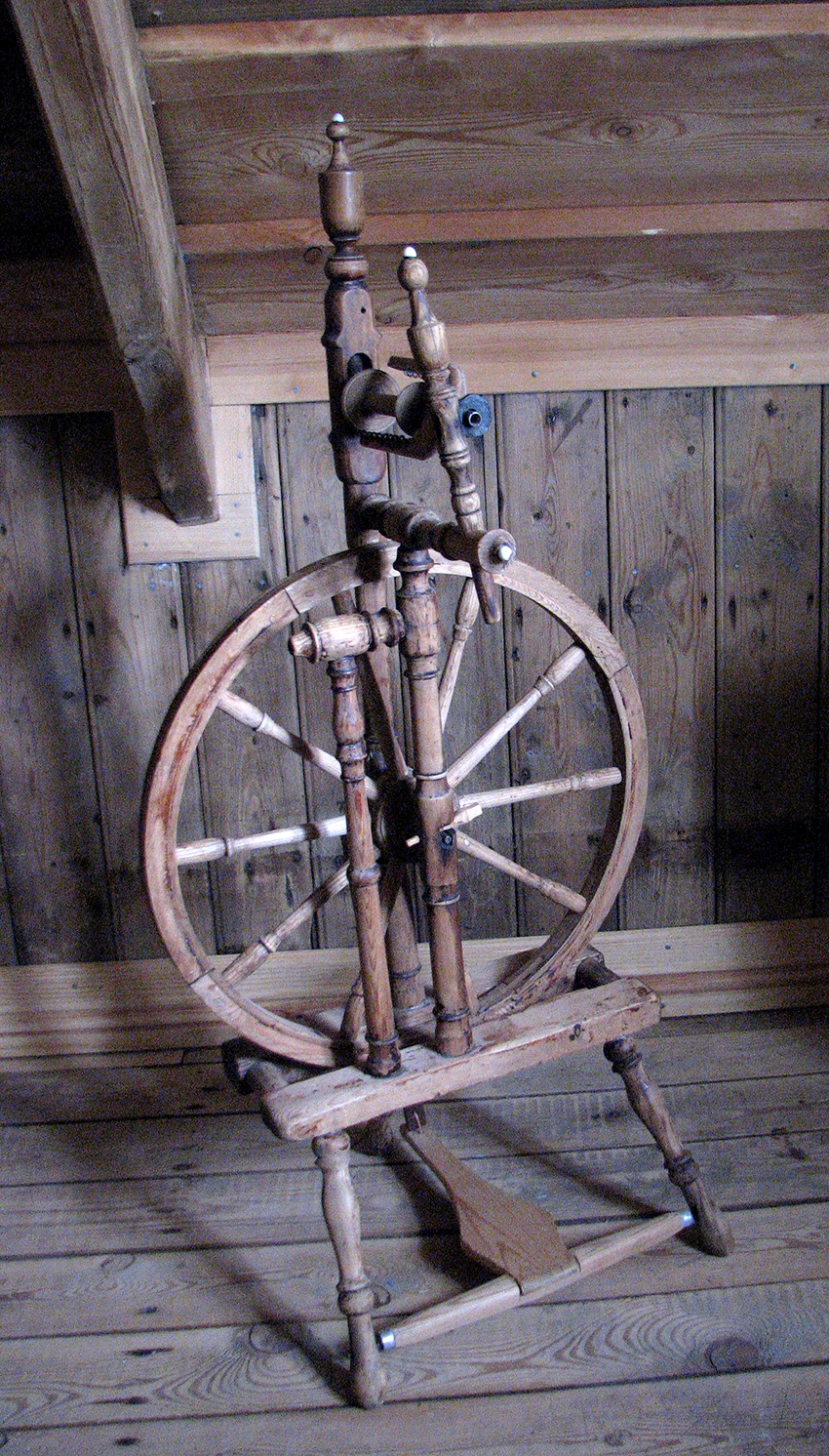
A ladder to the attic revealed two more (small) rooms, each with tools and materials presumably from the 19th century work at the farm. Wool is a major Icelandic product, so spinning would have been a common activity.


More antique tools were displayed under the attic window.


And, of course, I had to take a photo of this beautiful antique sewing machine. It's all set up with thread and everything! I managed to resist the temptation to do some sewing.

Next up: The Museum of Icelandic Sorcery and Witchcraft

Thursday, December 3, 2015

Súðavík and the Arctic Fox Center (Westfjords, Iceland)


The Arctic fox is the only indigenous land mammal in Iceland. Arctic foxes came to Iceland across the frozen sea during the last ice age. The Arctic Fox Center in Súðavík has a small museum exhibit about Arctic foxes as well as an outside pen with orphaned foxes they care for. (There is also a cafe which smelled so good!) In addition, the Arctic Fox Center (along with the Arctic Fox Research Station in Hornstrandir) conducts research related to the Arctic fox.


There are two Arctic fox color morphs: the blue and the white. The blue morph is dark throughout the year, though their fur gets bleached in late winter so they look almost white in spring. The white morph is white in winter, but brown dorsally and light gray ventrally in summer. Most of the Arctic foxes in continental parts of the world are the white morph, while the blue morph is more common in coastal areas. Most of the Arctic foxes in the Westfjords region of Iceland are the blue morph.

I included the trip to the Arctic Fox Center so that I could see an Arctic fox, as my guidebook assured me that it would be very unlikely that I would see one in the wild. Yet, late one night as we were driving to our hotel, we did see one. It was dark. We had been driving with care to avoiding hitting sheep and birds that were on the roadway, and we saw something small, low and dark dash out in front of the car. It ran ahead of us on the road for a while, and then went off into the field again. Given its size and movement, it could only have been an Arctic fox.


We were surprised that one of the foxes in the pen came right up to us. It seemed to have no fear of humans. When we asked the staff about it, one woman said that they were kind of bratty, always begging for food. Sadly, we weren't allowed to feed them.

In tundra areas, the Arctic fox largely eats lemmings and voles, and their numbers vary depending on the lemming population. In coastal areas (including Iceland), Arctic foxes eat birds, eggs, berries, and have even been known to follow polar bears to eat their leftovers. Sheep farmers in the Westfjords saw the Arctic fox as a danger to their livestock, as well (I'm assuming the foxes went after lambs).


While we were visiting the Arctic Fox Center in Súðavík, we noticed that there were bright blue balloons (and plastic cups and plates) decorating the buildings and gardens. We even came across these two blue figures behind someone's house. What is up with the blue decorations, we wondered? A quick internet search reveals that it was the International Blueberry Festival. Blueberries are the only sweet fruit grown in Iceland (everything else is imported) -- so I guess they deserve a festival!

Next up: Adventures with seabirds

Sunday, October 11, 2015

More to see in Reykjavik, Iceland

(Just as a heads-up -- this post includes a discussion of phalluses, as well as some pictures of preserved animal phalluses.  And ancient books.  And political art.  There is also mention of food and a spa.)

Tuesday, December 30, 2014

Vests and jackets and shawls, oh my! (Czech folk costumes, Musaion)


As I mentioned previously, the Musaion in Prague had quite an extensive collection of Czech folk costumes (see my earlier posts here, here, and here).  In this post I'll include photos of individual garments and accessories from the Musaion collection.  (You can click on the photos to enlarge them, if desired. My apologies for the poor quality of some of the photos -- what with low lighting and reflections from the glass, it's hard to get good photos in museums, at times.)

Thursday, December 11, 2014

Czech out these hats! (Musaion, Prague)

As I mentioned in an earlier post, I have a bit of an obsession with hats, so I took photos of some of the Czech hats at the Musaion (Ethnographic Museum) in Prague.  (My apologies for the terrible pun in the title of this post -- I blame the t-shirts we saw in Prague emblazoned with "Czech this out!")

(Note that you can click on any of the photos to enlarge them.)


Here is a closeup of one of the hats in the wedding tableau (you can see the whole tableau in the photos at the end of my previous post). Isn't it wonderful? I love the tiny size and the elaborate interweaving of ribbon and beadwork.  I so want a hat like this -- although I know it would look ridiculous on me.  The shiny beads and ribbon remind me of some of the Polish hats I saw at the Ethnographic Museum

Wednesday, December 10, 2014

Czech Folk Costumes (Musaion, Prague)


The Musaion (Ethnographic Museum) in Prague has an extensive collection of Czech folk costumes dispersed through a number of different rooms and display cases. It was interesting to see the similarities and differences from the Polish folk costumes at the Ethnographic Museum in Kraków.  I also found a list of the key differences between Czech and Slovak costumes here -- number 13 on the list is "If woman has a really giant bow attached to her head, it’s Czech."  Note the enormous bow on the costume pictured above.

I love the fanciful quality of design lines that extend well beyond the frame of the body.  It looks as if she could fly away on the first stiff wind.   Or maybe the bow can become a propeller and she just skims along the ground like a low-flying helicopter.  

(Remember that you can click on the photos to enlarge them, if desired.)

Monday, November 17, 2014

Czech Holiday Costumes & Customs (Musaion, Prague)

In addition to showing folk art, costumes and tools, the Musaion (Ethnographic Museum) also had exhibits related to the major religious holidays. Many of the costumes and practices were derived from pre-Christian traditions, including themes of nature and respect for ancestors.  The signage at the museum didn't include specific details about the particular costumes, so I did a bit of internet research and turned up a number of unusual Czech folk traditions. 


Sunday, November 16, 2014

Petřín Hill and the Musaion (Prague, Czech Republic)


Lego Museum

On our fifth day in Prague, we walked to Petřín Hill, a large public park. On our way, we looked in at the Lego Museum. While we didn't actually go in to see the museum exhibits, we ogled the Lego kits in the shop and admired this mural, made entirely of Legos. 

View from the Legion Bridge (Most Legií) over the Vlatava River

On our way to Petřín Hill, we crossed over the river via the Legion Bridge, which was virtually empty of pedestrians (compared to the crush of the Charles Bridge). This photo is looking toward the Charles Bridge.  You can see beautiful pictures of the Legion Bridge here.

Monday, November 10, 2014

The Sex Machines Museum (Prague, Czech Republic)

We often enjoy quirky, off-beat museums, so we made time to visit two museums listed as part of "Eccentric Prague" in one of our guide books: The Museum of Torture Instruments and the Sex Machine Museum. I didn't take pictures at the torture museum -- not only was the content disturbing, but I wasn't sure about the historical accuracy of the signage or the provenance of the actual implements being shown.

But I did take photos at the Sex Machines Museum -- after all, being a sex educator, this is work related for me. (Does this make my whole trip a tax write-off?) This is the third sex-related museum we've been to -- we've seen the Museum of Sex in NYC and the Erotic Museum of Barcelona. The Sex Machine Museum in Prague was good, although I would have liked more detailed signage to provide context for the items shown. The museum exhibits included a variety of sex aids, including some elaborate mechanical sexual furniture, as well as anti-masturbation machines and clothing, chastity belts, and BDSM equipment and accessories.


[Note:  If you are offended by frank discussions or depictions of sexuality, you may not wish to read further.]

Saturday, November 8, 2014

Municipal House and the Jewish Quarter (Prague, Czech Republic)


Municipal House (Obecní dům)

Just a few blocks from our hotel is the grand Municipal House, one of the finest examples of Prague Art Nouveau. It was built on the site of the former royal palace in the early 20th century and a number of artists contributed to its design and decoration, including Alfons Mucha. It currently houses civic functions, a ballroom and the Smetana concert hall.

We were only able to look at the public areas of the building, as we couldn't make it to one of the daily tours, so we didn't see the paintings by Mucha in Mayor Hall. But we did spend a solid morning at the Mucha museum a couple of blocks away, poring over his posters, paintings, and sketches, as well as watching a film about his life. He is often best remembered for the work he did in Paris, so I did not know how much he worked for the creation of an independent state and recognition of the history and culture of those in Czechoslovakia. He was pleased to provide his work to a number of buildings in Prague and he spent years finishing his Slav Epic. He was among the first to be arrested by the Nazis after they invaded and it broke his health, as he died shortly after being released. 


Municipal House (Obecní dům)

There was beautiful metal work in the outdoor railings as well as around the elevator in the lobby. I'm sparing you the photos of the elevator grille I took. Seriously, though, would one ever get tired of this beauty?

Tuesday, November 4, 2014

Hats! at the Ethnographic Museum in Kraków


As I perused the folk costumes at the Ethnographic Museum in Kraków, I was enchanted by the elaborately decorated hats.  I've written before about how I used to wear and collect hats.  Although I don't collect hats any more and rarely wear them, I guess I still have some inner hat lust that emerged at the sight of these beauties.

More than most accessories, hats seem full of symbolic and cultural significance.  As we were traveling, we visited synagogues, where Q was required to cover his head, and cathedrals, where he was asked to remove his hat to uncover his head.  Wearing hats can denote respect or disrespect.  Historically, women's hats have often been derided as silly fashion accoutrements, and yet a woman wasn't considered fully dressed without an appropriate hat.  Each type of hat has its own meaning -- the cap, the fedora, the bowler, all call to mind different situations and different types of people. (In one episode of the British sitcom, Are You Being Served?, they discuss specific rules about who is allowed to wear which type of hat, based on their rank in the company, for example.)  Consider this quote from Bella Abzug:
I began wearing hats as a young lawyer because it helped me to establish my professional identity. Before that, whenever I was at a meeting, someone would ask me to get coffee. -- Bella Abzug
The hats at the Ethnographic Museum seemed more like the kind one would wear on festive occasions, rather than an everyday accessory.  But as the museum signage notes, folk costumes carry a great deal of meaning about one's social place, so without a more detailed understanding of traditional Polish culture, I can't speak to the cultural significance of the hats.  But I can enjoy the artistry and adornment they represent. 

Monday, November 3, 2014

Delightful Details: Embellishment at the Ethnographic Museum in Kraków

When I'm looking at clothing in museums, I'm always on the lookout for Delightful Details -- those little touches that make all the difference in the garment.  I'm particularly drawn to embellishment:  Embroidery, beading, and other types of surface design make my heart sing.  The Polish folk costumes at the Ethnographic Museum were full of embellishment and I tried to capture as many details as possible while I was there.  There is so much inspiration here -- I am excited about the idea of translating these folk designs into more contemporary clothing embellishment and textile art.

Remember that you can click on the photos to enlarge them.  (My apologies for the quality of some of the photos -- it's hard to get good photos in museums at times.)  


This vest features seed beads and sequins to create floral designs and shirt buttons (they look like mother-of-pearl to me) to outline the petals at the bottom of the vest.  I also like the triangle points at the top of the vest, which create an interesting neckline. 

Sunday, November 2, 2014

The Ethnographic Museum (Kraków, Poland)


Folk costumes at the Ethnographic Museum (Kraków, Poland).

The next day we spent the morning at the Rynek Underground museum (as I mentioned in an earlier post) and then walked back to the Kazimierz district to see the Ethnographic Museum, housed in the former town hall building.

The museum had reconstructed interiors and models of homes and workshops (e.g., a fulling mill), tools and implements related to agricultural work and craft, and displays of folk art, such as nativity scenes (more szopka!), decorated eggs, and a special exhibition of woodcuts. However, I was mostly interested in the costumes.

The museum had a whole room devoted to folk costumes, and I spent a happy hour or so there, taking photos of costumes and embellishment details. Luckily, there was also a comfy sofa, so that Q could sit and wait for me to be done ooh-ing and ah-ing over the costumes.


The exhibit also had a nice general summary of Polish folk costume, noting that: "Costume was of primary importance in folk culture. It helped to determine social status, area of residence, marital and financial status of a person wearing it. The function of a festive attire made people spare no effortmor [sic] expense on it. Costume is one of the leading elements in folk art."

See? My interest is justified, both at an artistic and anthropological level.

Sunday, July 22, 2012

Maid: Unpacking Ambivalence

Sometimes, while I am engaged in some unpleasant cleaning task, I think about how nice it would be to hire someone to do some of these cleaning jobs.  I'm not talking about a weekly whole-house cleaning (I can't envision that, somehow), just having someone in occasionally to clean the kitchen and bathrooms.  When I'm on my hands and knees scrubbing the kitchen floor, the vision of a professional service sweeping in and leaving behind clean, gleaming surfaces beckons to me.  And yet, apart from the time we hired a cleaning service when we moved out of our rental house (it seemed a good investment to make sure we got our deposit back), I haven't succumbed to the temptation of professional house cleaners.  In part, this is due to entropy (the irony of doing hours of scrubbing because I'm too lazy to call and arrange the service does not escape me) and being worried about the quality of their work (will things get broken or damaged?  I know I can do this safely and carefully -- will they?), but I also have a strong discomfort with the prospect of handing off my cleaning to professionals.  It seems the epitome of bourgeois privilege to not have to do one's own cleaning.  Let's face it, even with all my careful talk about cleaning professionals, the term that comes to mind is . . . maid.  And I'm not ready to have a maid.

Saturday, January 7, 2012

Interrogating Museum Exhibits

I just gave a talk at the AFACCT conference with some of my colleagues about our experience with the Smithsonian Faculty Fellowship program at Montgomery College.  It was a wonderfully interdisciplinary panel, reflecting the diversity of perspectives in our SFF cohort (Marcia Bronstein, English/ESL [moderator]; Genevieve Carminati, English and Women's Studies; Marissa Prosser, Anthropology; Michael Tims, Biology; and me, Psychology).  We each discussed the museum assignments we created for our students and how that facilitated their learning as well as how that reflected the various communities that interconnect through the SFF program.  I talked about what I learned from the museum curators about reading objects and images.

Monday, January 2, 2012

Looking back on 2011

Rabbit on our driveway (6/2011)

New Year's Day is traditionally a day of new beginnings.  I love new beginnings -- the excitement of starting fresh with the allure of pristine new projects.  Accomplishments are just over the horizon, glittering in the near distance.

But taking stock of where we are means pondering the past as well as looking to the future. Yet I'm less likely to mull over tasks completed than to dream of what is to come.  So I'm challenging myself to spend some time thinking back over what I've done.  Rather than compile a list of individual achievements (as in Lisa Call's 100 Accomplishments for 2011), I wanted to think about how my activities fit into my goals.  Perhaps I'm considering my cosmic footprint for 2011 (to borrow a concept from fellow blogger and academic Jill Kronstadt, whose blog is really worth reading).  So in the larger sense, what did I do in 2011?

Sunday, October 16, 2011

The eye of the beholder: Interpreting art

"Art is not meant to be merely decorative or beautiful; instead, it can be a question, an argument, a proposal, a resolution." -- Hye Yeon Nam


Last weekend, I took some of my Psychology of Women students to see Portraiture Now: Asian American Portraits of Encounter at the National Portrait GalleryIt was an interesting and thought-provoking exhibit and we had a number of conversations about the potential meanings of the various works.  We were often left with many unanswered questions.  I was particularly struck by a four-part video self-portrait by Hye Yeon Nam, Walking, Eating, Drinking, and Sitting.  We stayed for some time in front of these pieces, talking about what we noticed, what feelings they evoked, and what they might mean. 

Saturday, April 30, 2011

Butterflies and the Big Bang

Last week's trip to New York included a visit to the American Museum of Natural History in NYC.  It was raining and there was a long line to get in, but Q's mother took us around to a different entrance and we avoided the wait. First stop, the Butterfly Conservatory, full of beautiful butterflies. 


Display cases featured exquisite specimens (dead, sadly, but beautiful)
Did you know that their multicolored wings are made up of many scales, each of which is only one color, and which look suspiciously like beads when seen close up?  Hmm. . . there is a seed bead project in there somewhere, I'm sure.