Showing posts with label architecture. Show all posts

Sunday, December 6, 2015

Litlibaer (Westfjords, Iceland)


Just up the road from the seal colony is Litlibaer, a historical 19th century farmstead. Not only is it a charming home with historic photos and tools, but they serve coffee and waffles! Just the restorative lunch we were looking for after a long drive.


Here you can see the traditional turf roof on the farmhouse. It also included both stone and wood construction.


The rooms were quite small, with low ceilings -- very cozy. We ate at the table by the window and enjoyed looking at the photos of family members who had lived at the farmhouse over the years.


A small pantry area next to the stairs included a variety of historic kitchen tools.


Q is enjoying his coffee and waffles.  (Not being a coffee person, I had hot chocolate.)  The waffles were heart-shaped and topped with jam and whipped cream -- quite delicious!


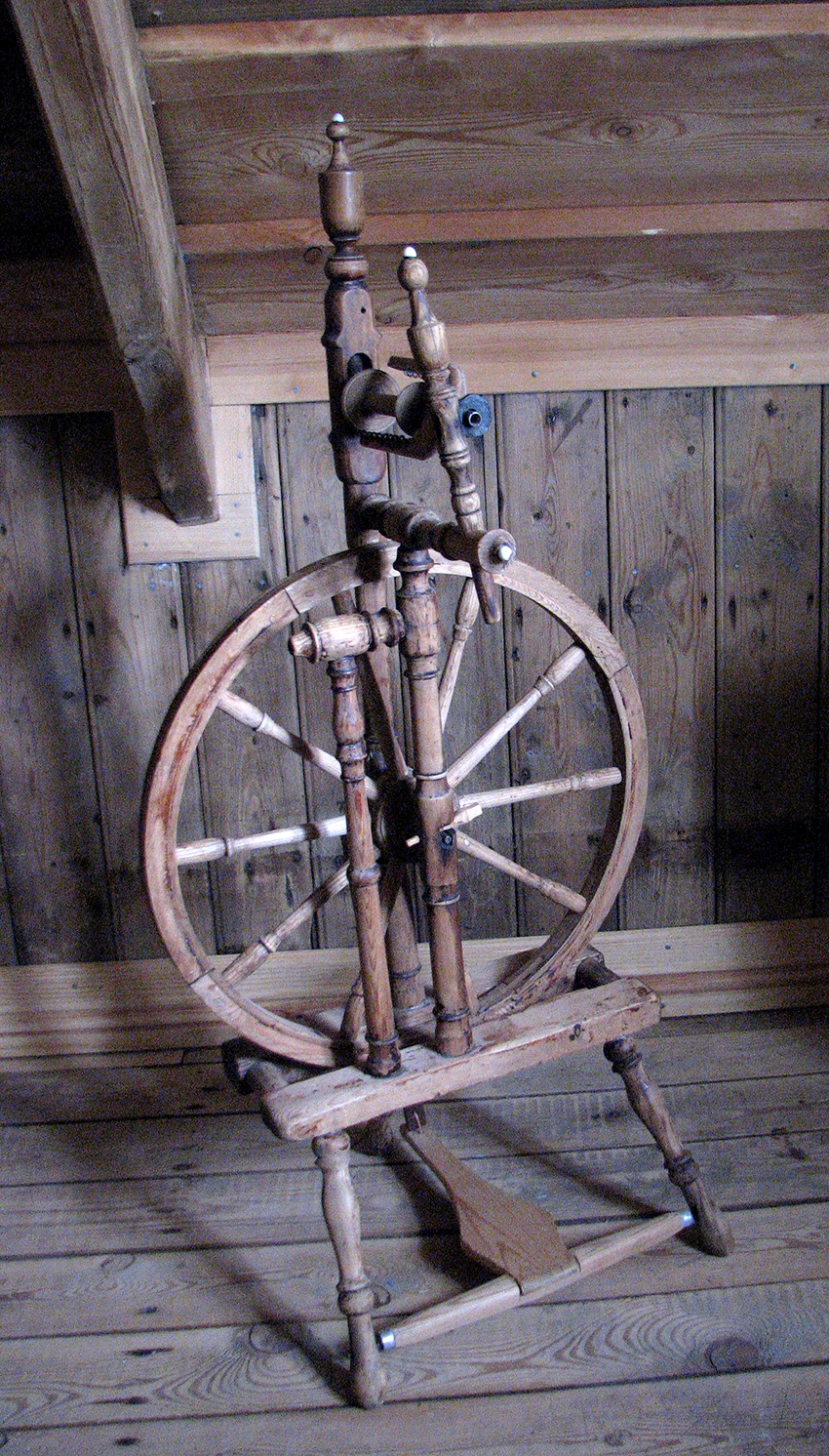
A ladder to the attic revealed two more (small) rooms, each with tools and materials presumably from the 19th century work at the farm. Wool is a major Icelandic product, so spinning would have been a common activity.


More antique tools were displayed under the attic window.


And, of course, I had to take a photo of this beautiful antique sewing machine. It's all set up with thread and everything! I managed to resist the temptation to do some sewing.

Next up: The Museum of Icelandic Sorcery and Witchcraft

Saturday, October 3, 2015

Reykjavík, Iceland

Where to go for vacation this summer?  We remembered the gorgeous photos we had seen of Iceland, and thought that would be the perfect place to escape the urban heat and humidity of August in Maryland.  So we planned a week-long trip to Iceland.  It's not a very large country (about the size of Ohio), but we didn't want to have to rush through our sightseeing, so we decided to just focus on seeing the western side of the country.  This turned out to be wise, since driving on the often-unpaved roads, with switchbacks up and down the mountains, took much longer than we expected.

(Note that you can click on any of the photos to enlarge them.)

Harpa concert hall (Reykjavík, Iceland)

Our first evening in Iceland was spent in Reykjavík. We wandered around the harbor area (near our hotel) and came across this dramatic building. It is Harpa, the new and award-winning concert hall. I loved the way the sun glinted off the glass panels.

Harpa concert hall (Reykjavík, Iceland)

Here is another view of the street side of Harpa concert hall. The design almost looks like a glass honeycomb.

From inside the Harpa concert hall (Reykjavík, Iceland)

From the inside of Harpa concert hall looking up through the crystalline ceiling, the effect of the light through the complex glass paneling is quite striking. It really is an unusual design. Plus, there was a very nice gift shop in the lobby.

Harpa concert hall (Reykjavík, Iceland)

This is the Harpa concert hall from the harbor side. Look at all the pretty colors reflected from the glass panels!

Troll puppets (Reykjavík, Iceland)

Icelandic folklore is full of tales of huldufólk (hidden people or elves) and other creatures, such as these larger-than-life trolls in front of one of the tourist shops. Many Icelanders still believe in the huldufólk -- there have been cases of construction work stopped or redirected so as not to disturb the elves living in that area. We saw one hill with a number of little wooden houses on it, which are often put out in Icelandic gardens for the huldufólk.


Of course, after seeing the wonderful troll puppets, we had to go into the shop, where Q found this adorable puffin hat. We resisted buying it, though it would have been quite the statement hat for him to wear to work.

Hallgrímskirkja (Reykjavík, Iceland)

We walked up to Hallgrímskirkja, the largest Lutheran church in Iceland. The modernist design is very striking, and apparently is meant to represent the basalt lava flows in the Icelandic landscape.  (You can see some amazing basalt columns from all over the world here.)  The interior of the church features an enormous, 5275-pipe organ (we didn't get to see the interior, though).


And on our way to Hallgrímskirkja, Q found a cat to pet.  The cat rests on a step reading "Love and Peace" -- an invitation to be petted, surely.


Apparently, cats rule Reykjavik. At least that is what the t-shirts claim.


One of the delightful aspects of visiting Iceland in the summer is the extended daylight hours. This photo was taken around 11:00pm -- the tail end of a long, lovely sunset on our first day in Iceland.


We took one last look at the sunset over the harbor as we walked back to our hotel.

Thursday, January 1, 2015

St. Vitus Cathedral and Prague Castle (Prague, Czech Republic)


St. Vitus Cathedral

Our walk around Hradčany included seeing Bílek Villa (an art nouveau villa designed by Czech sculptor and artist, František Bílek; we just saw the outside, as it was closing when we got there), the Pisek Gate (a baroque gateway that was part of the new fortifications built in the 18th century -- alas, it was under construction) and two cubist houses designed by Josef Gočár. By that time, it was getting dark, so we walked over to Prague Castle to see St. Vitus Cathedral by night.

The building of St. Vitus Cathedral took over 600 years (beginning in 1344 and not completed until 1929). It is an amazing Gothic cathedral -- Q was particularly struck by the elaborate flying buttresses (not visible in this photo). The cathedral itself was closed at night, so we decided to come back the next day to see the interior.


 The stairs up to Prague Castle

Friday, November 14, 2014

Wenceslas Square (Prague, Czech Republic)

After spending the morning at the Mucha museum, we walked around Wenceslas Square in New Town (Nové Město). Wenceslas Square was the site of the 1989 Velvet Revolution demonstrations and the announcement of the fall of communism in what was then Czechoslovakia. The square is now a testament to capitalism, with loads of shopping and eateries, but also has some interesting architecture and public art.


Grand Hotel Evropa

Saturday, November 8, 2014

Municipal House and the Jewish Quarter (Prague, Czech Republic)


Municipal House (Obecní dům)

Just a few blocks from our hotel is the grand Municipal House, one of the finest examples of Prague Art Nouveau. It was built on the site of the former royal palace in the early 20th century and a number of artists contributed to its design and decoration, including Alfons Mucha. It currently houses civic functions, a ballroom and the Smetana concert hall.

We were only able to look at the public areas of the building, as we couldn't make it to one of the daily tours, so we didn't see the paintings by Mucha in Mayor Hall. But we did spend a solid morning at the Mucha museum a couple of blocks away, poring over his posters, paintings, and sketches, as well as watching a film about his life. He is often best remembered for the work he did in Paris, so I did not know how much he worked for the creation of an independent state and recognition of the history and culture of those in Czechoslovakia. He was pleased to provide his work to a number of buildings in Prague and he spent years finishing his Slav Epic. He was among the first to be arrested by the Nazis after they invaded and it broke his health, as he died shortly after being released. 


Municipal House (Obecní dům)

There was beautiful metal work in the outdoor railings as well as around the elevator in the lobby. I'm sparing you the photos of the elevator grille I took. Seriously, though, would one ever get tired of this beauty?

Friday, November 7, 2014

Old Town (Prague, Czech Republic)


Lokál (Prague, Czech Republic)

Our first night in Prague, we had dinner at
Lokál, a restaurant/beer hall which features Czech cuisine. It was very loud and a bit smoky (even in the non-smoking section), but the food was tasty. The table next to ours was celebrating some special occasion, perhaps a birthday, as they brought a cake as well as ordering lots of beer. Sadly, they didn't offer us any cake.

I liked the designs scratched into the wood paneling (lit from behind, they glowed). We decided this might count as an example of sgraffito (a Renaissance technique of creating designs by scratching into a surface to reveal a different color or tone underneath).  Both Q and I remember doing crayon sgraffito as children; I put down colored crayon markings and then covered the entire page with black crayon (a tedious process that kept me occupied
for some time -- looking back, I can see why my mother encouraged this activity).  Then I used a pin to scratch through the black crayon, revealing the colored crayon underneath.  Sgraffito!  (I wonder, would reverse appliqué be a kind of textile sgraffito?)

Church of Our Lady Before Týn

After our dinner, we wandered around the Old Town (Staré město) area, walking by In Utero, a large sculpture of a pregnant woman, one of the many David Černý sculptures in and around Prague.

We found our way to the Old Town Square (Staroměstské náměstí), which has been Prague's main public square since the 10th century. We walked through the square virtually every day we were in Prague, and it was always full of people. We saw a variety of musicians as well as some dancer/contortionists, in and amongst the throngs of tourists. That first night we were treated to a women's chorus (which brought back fond memories of when I sang with the Anna Crusis Women's Choir), although I have no idea what the women were singing, as it was (presumably) in Czech.

The
Church of Our Lady Before Týn, with its Gothic spires, was not only dramatic at night and beautiful inside by day (no photos allowed, alas), but it also provided a terrific landmark to orient us as we walked around Old Town. The church was built in the 15th century. The interior is Baroque in style and contains the tomb of Tycho Brache, the famous Danish astronomer who died of a burst bladder, being too polite to leave the royal table to relieve himself. Let that be a lesson to you.

Thursday, November 6, 2014

The Art Deco Imperial Hotel (Prague, Czech Republic)

The foyer in the Art Deco Imperial Hotel (Photo by Q)

Our hotel in Prague was absolutely beautiful. The Art Deco Imperial Hotel was built in 1914, and combines the architectural styles of Art Deco, cubism and Art Nouveau. The hotel interior is full of gorgeous tile work, such as this bas-relief in the foyer that reflects Egyptian motifs. The building is listed as a Czech National Monument. 

Saturday, November 1, 2014

Wawel Hill & the Jewish Quarter in Kazimierz (Kraków, Poland)


Wawel Cathedral (Kraków, Poland)

We had another beautiful day to explore Wawel Hill, the site of Wawel Castle and Wawel Cathedral. This Gothic cathedral held coronations, royal funerals and entombments for centuries.

The tower on the left is a clock tower, topped by a Baroque spire (18th century) and statues of saints Wacław, Adalbert, Stanislaw, & Kazimierz. The tower on the right is a bell tower.

But behind it (not visible from this angle) is Zygmunt/Sigismund Tower which holds the Zygmunt/Sigismund Bell, the largest historic bell in Poland. It is 2m high, 2.5m in diameter and weighs 11 tons (the clapper alone weighs 350kg). It takes eight strong people to ring the bell. We walked up the twisty and narrow stairs to see it and it is indeed huge and heavy-looking. You can see the bell and hear how it sounds here.

Photos were prohibited inside the Cathedral, so I can't show you the gorgeous stained-glass windows. But you can see some nice photos of the interior of the cathedral here.  


Wednesday, October 29, 2014

Old Town (Kraków, Poland)

Singing group in the Maly Rynek in Kraków

Generally, my schedule revolves around the academic year, so if we take a vacation, we do so during the summer.  But this year, I'm on sabbatical (my first sabbatical ever), so we were able to take a trip in the fall.  We spent two weeks visiting Kraków in Poland and Prague in the Czech Republic.  (Note that this travelogue will not be precisely sequential, but rather thematic or by area -- we visited some areas more than once, so I'll sometimes use photos from different days of our trip in the same post.  You can click on the photos to enlarge them, if desired.)

Our visit to
Kraków coincided with the Kraków Film and Music Festival, so there were various performances, films, and booths set up in the Maly Rynek (small town square) and the Rynek Główny (main town square) in Old Town. The town squares had a festive atmosphere, even at night, which was quite delightful -- lots of vendors and food stalls, as well as performers.  The photo above shows one of the performing groups in the Maly Rynek, presumably singing traditional Polish music.

Wednesday, August 12, 2009

Today's visual inspiration


Art Deco details from the Hotel Clarendon in Quebec City, Canada. I think these types of designs would look fabulous as surface design elements on a garment -- I'd love to interpret them in gold foil or embroidery on a coat or jacket. I'm not usually drawn to Art Deco, but just look at those luscious spirals and elegant lines -- beautiful.